Selecting the right ball valve is essential for achieving reliable shut-off performance, safe operation, and long service life. Among the many types of ball valves, two of the most widely used designs are floating ball valves and trunnion mounted ball valves.
Although both operate using the same quarter turn principle, their internal construction, sealing mechanism, pressure capability, and application range are quite different.
This guide compares floating and trunnion ball valves in detail, helping engineers, buyers, and maintenance teams understand how each ball valve design performs under different operating conditions.
Floating ball valves use a free-moving ball that is pushed against the downstream seat by line pressure to create a seal. Trunnion mounted ball valves use a mechanically supported ball held by upper and lower trunnions, reducing operating torque and providing reliable sealing in high-pressure and large-diameter applications.
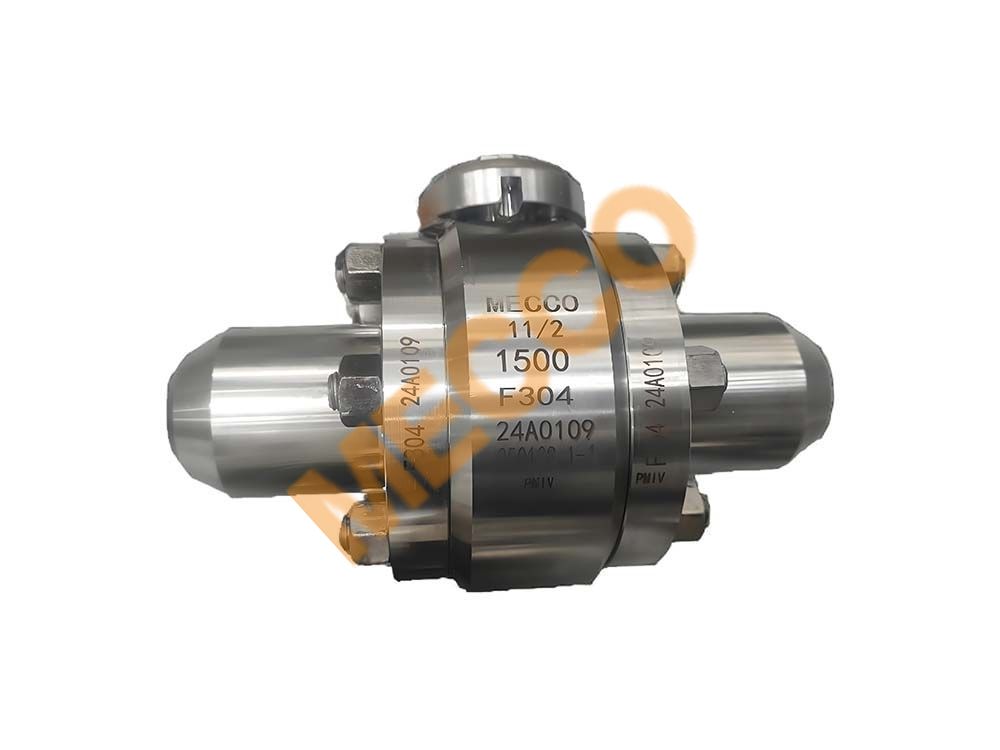
A floating ball valve contains a floating ball that is not mechanically fixed at the top and bottom.
Instead, the ball is supported by the valve seats.
When fluid enters the valve, line pressure pushes the floating ball toward the downstream seat, creating a tight seal.
When the valve is closed, pressure continues to press the ball against the downstream seat, improving sealing performance.
This simple structure makes floating ball valves suitable for many low- and medium-pressure industrial systems.
The operating sequence is straightforward:
This self-sealing mechanism allows floating valves to achieve dependable shut-off without additional support structures.
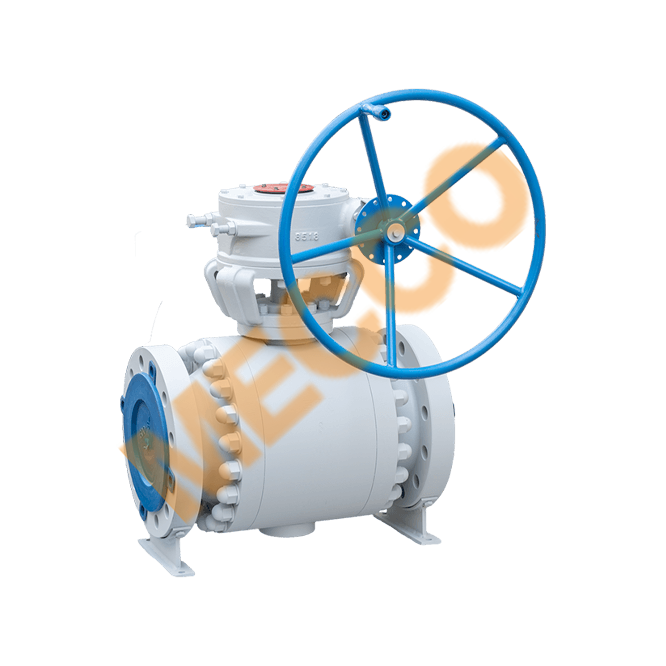
Unlike floating designs, trunnion mounted ball valves use a ball that is mechanically supported by upper and lower trunnions.
The ball remains fixed in position while the seats move slightly to achieve sealing.
Instead of pressure moving the ball, spring-loaded or pressure-assisted seats press against the ball surface.
This trunnion design reduces stress on the valve seats and allows the valve to perform efficiently under higher pressure conditions.
When the operator turns the handle or actuator:
Because the ball does not shift under pressure, the sealing load is distributed more evenly.
Floating valves rely on fluid pressure.
As pressure increases, the floating ball is pushed against the downstream seat, improving sealing.
Trunnion valves rely on movable seats instead of ball movement.
This provides consistent sealing even under changing operating conditions.
One of the biggest differences is pressure rating.
Suitable for:
Designed for:
As operating pressure increases, trunnion valves become the preferred solution.
Another major difference is the torque required to operate the valve.
Floating valves experience higher seat friction because pressure pushes the ball against the seat.
As pressure rises, the required operating torque also increases.
The trunnion design minimizes friction by supporting the ball independently.
Benefits include:
This is one reason trunnion mounted valves are widely used in automated pipeline systems.
Floating ball valves are commonly available in:
Trunnion mounted ball valves are frequently selected for:
Both valve types provide excellent flow control when fully open.
Because the bore aligns directly with the pipeline, the flow path remains nearly unrestricted.
This results in:
For applications requiring maximum capacity, full-port versions are commonly selected.
Both floating and trunnion valves are available in metal seated configurations.
Metal seats are commonly selected for:
Compared with soft seats, metal seats provide greater resistance to wear in demanding environments.
As operating pressure increases, floating valves experience greater seat loading.
For higher pressure systems, trunnion valves offer several advantages:
These characteristics make trunnion valves common in:
Many API 6D trunnion valves support double block and bleed (DBB) functionality.
This allows pressure trapped between the seats to be safely released during maintenance.
Some systems also require double isolation and bleed (DIB) performance, which provides additional isolation capability depending on seat configuration.
These functions improve maintenance safety and operational flexibility.
Industrial projects often specify compliance with recognized industry standards.
Common standards include:
Selecting valves that comply with applicable standards helps ensure compatibility with project specifications and regulatory requirements.
| Feature | Floating Ball Valve | Trunnion Ball Valve |
|---|---|---|
| Ball Support | Floating ball | Fixed trunnion support |
| Sealing Method | Downstream seat | Spring or pressure-assisted seats |
| Pressure Rating | Low to medium | Medium to high pressure |
| Valve Size | Small to medium | Medium to large |
| Torque Required | Higher | Lower |
| Initial Cost | Lower | Higher |
| Automation | Good | Excellent |
| API 6D Pipeline Service | Limited | Common |
| Double Block and Bleed | Limited | Common |
| Double Isolation and Bleed | Limited | Available |
| Heavy Pipeline Service | Suitable for some applications | Widely used |
A floating ball valve is often the right choice when:
A trunnion mounted ball valve is often preferred when:
Choosing the appropriate valve depends on operating pressure, media characteristics, valve size, maintenance requirements, and project specifications.
Both floating ball valves and trunnion mounted ball valves provide dependable shut-off performance, excellent sealing, and simple quarter turn operation.
Floating designs offer a cost-effective solution for general industrial applications, while trunnion valves are engineered for high pressure, larger pipe sizes, and demanding pipeline service.
Understanding differences in support structure, sealing method, operating torque, pressure capability, and compliance with industry standards such as API 6D helps engineers and buyers select the most suitable valve for long-term performance.
Floating ball valves use line pressure to push the ball against the downstream seat for sealing, while trunnion mounted ball valves use a mechanically supported ball with movable seats.
Because the ball is supported by upper and lower trunnions, pressure does not force the ball against the seats as much, reducing the torque required to operate the valve.
Floating ball valves are suitable for low- and medium-pressure applications, smaller pipe sizes, and general industrial services.
Yes. Their supported ball structure, stable sealing mechanism, and lower operating torque make them well suited for higher pressure applications.
The downstream seat is the valve seat located on the outlet side of the valve. In floating ball valves, line pressure pushes the ball against this seat to create a seal.
API 6D is an internationally recognized standard for pipeline valves used in oil, gas, and petrochemical transmission systems.
DBB isolates pressure using two sealing surfaces and allows the cavity between them to be vented. DIB provides isolation from both upstream and downstream sides using independent sealing mechanisms, offering additional protection for certain applications.