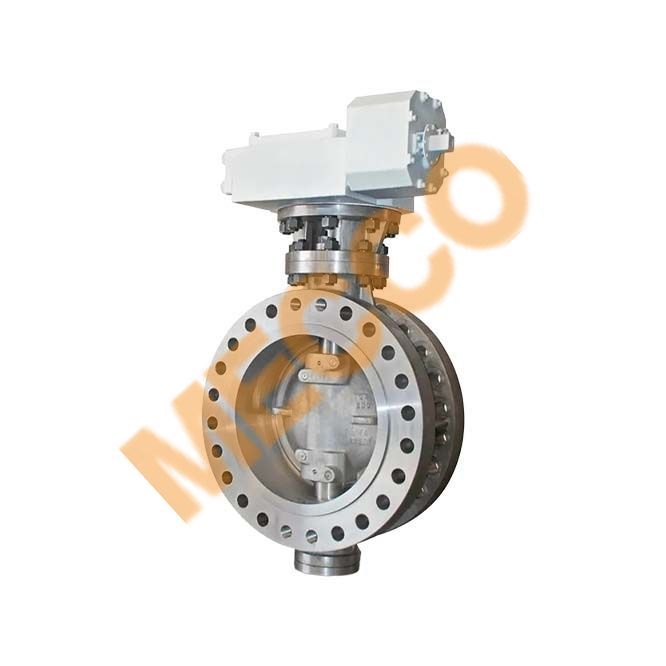
Butterfly valves are widely used across oil & gas, power generation, water treatment, and chemical processing because they are compact, cost-effective, and reliable for large-diameter pipelines. Among the most advanced designs, the double eccentric butterfly valve and the triple eccentric butterfly valve are engineered for demanding service conditions where durability, tight sealing, and corrosion resistance are required.
This guide explains how these two designs differ, how they work, and how to choose the right option for your application.
Double eccentric butterfly valves use two offsets to reduce seat friction and improve sealing performance for medium-to-high pressure service.
Triple eccentric butterfly valves add a third offset that creates a true metal-to-metal seal, making them suitable for high temperature, high pressure, and zero-leakage applications.
An eccentric butterfly valve differs from a traditional concentric valve by shifting the disc away from the seat centerline. This reduces friction during opening and closing, improving durability and sealing.
Eccentric butterfly valves are designed to:
Reduce seat wear
Improve shut-off performance
Extend operational lifespan
Handle higher pressure and temperature
These valves offer reliable performance in demanding industrial environments where standard butterfly valves may wear quickly.
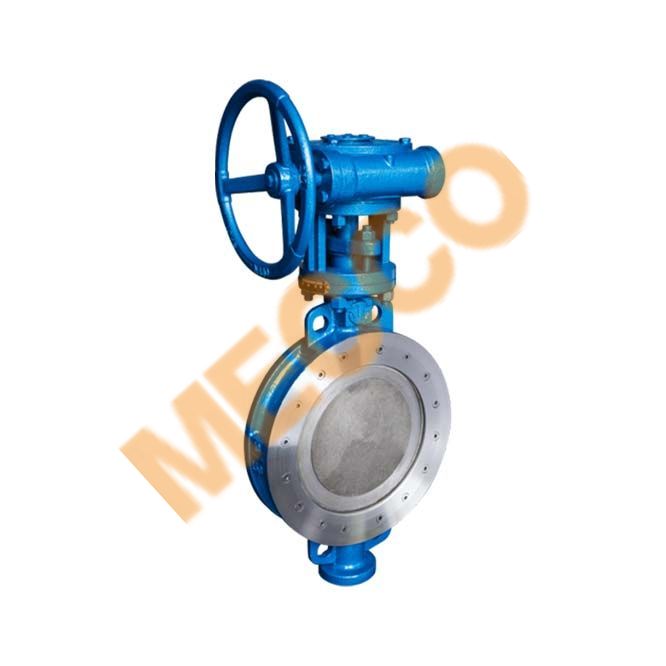
A double eccentric butterfly valve (also called a high performance butterfly valve) uses two offsets:
The shaft is placed behind the disc centerline.
This reduces friction during operation.
The shaft is positioned slightly away from the pipeline centerline.
This allows the disc to lift away from the seat immediately when opening.
Reduced seat wear
Faster opening and closing
Better sealing than concentric valves
Suitable for medium and high pressure systems
The valve body is commonly made from ductile iron or stainless steel, offering strong mechanical performance and corrosion resistant properties.
Oil & gas pipelines
Water treatment plants
Power generation systems
HVAC and marine systems
Because of reduced friction and improved sealing, these valves provide an extended service life compared with traditional butterfly valves.
A triple eccentric butterfly valve includes a third offset in addition to the two used in the double eccentric design.
The seat and disc are machined into a cone shape rather than a flat surface.
This creates a cam-like movement where the disc contacts the seat only at the final closing moment.
This geometry eliminates sliding friction completely.
True metal-to-metal sealing
Zero leakage performance
Suitable for extreme temperature and pressure
Excellent fire-safe characteristics
Triple eccentric valves are often manufactured using stainless steel or special alloys for aggressive media and harsh operating conditions.
| Feature | Double Eccentric | Triple Eccentric |
|---|---|---|
| Offsets | Two offsets | Three offsets |
| Seat Type | Soft or metal seat | Metal-to-metal seat |
| Friction During Operation | Low | Near zero |
| Temperature Range | Medium to high | Very high |
| Leakage Performance | Bubble-tight | Zero leakage |
| Cost | Lower | Higher |
| Typical Use | General industrial service | Severe service & critical processes |
Material selection directly impacts durability and performance.
Cost-effective
Strong and durable
Suitable for water and general industrial service
High corrosion resistance
Ideal for chemical and marine environments
Performs well under high temperature and pressure
For aggressive media, both valve types may use special alloys or protective coatings to maintain long-term performance.
Operating pressure is moderate to high
Some leakage tolerance is acceptable
Budget and cost efficiency are important
Soft or metal seats are suitable
Zero leakage is required
High temperature or high pressure service is involved
Fire-safe performance is required
The application involves aggressive or hazardous media
Modern high performance butterfly valve designs deliver:
Reduced maintenance needs
Compact installation footprint
Lightweight construction
Long sealing performance
Extended service life in harsh environments
These benefits make eccentric butterfly valves a preferred solution across many industries.
The triple eccentric valve includes a third offset that eliminates friction and enables metal-to-metal sealing, making it suitable for extreme conditions.
Because the disc lifts off the seat during opening, friction is reduced, minimizing wear and extending service life.
Oil & gas, petrochemical, power generation, offshore platforms, and high-temperature processing plants.
Yes. They perform well in medium to high pressure systems and offer reliable sealing.
Stainless steel provides corrosion resistant performance and handles aggressive media and harsh environments.
Both valve types improve on traditional butterfly valve designs, but they serve different levels of operating conditions. The double eccentric design works well for general industrial service, while the triple eccentric butterfly valve is engineered for severe environments where zero leakage and high temperature resistance are required.
Understanding the differences helps engineers select the most suitable valve for performance, durability, and long-term efficiency.