In industries such as LNG, hydrogen, and air separation, equipment must operate reliably at temperatures as low as −196°C. Standard industrial valves cannot maintain toughness or sealing performance under such extreme conditions. This is where cryogenic valves—including LNG valves, low temperature valves, cryogenic ball valves, cryogenic gate valves, and cryogenic globe valves—play a crucial role.
Cryogenic valves are engineered for extreme cryogenic applications, ensuring safe flow control, minimal leakage, and long-term reliability inside critical piping systems. This guide explains what cryogenic valves are, how they work, key valves design features, and why materials such as stainless steel are essential for low-temperature service.
Cryogenic valves are highly engineered industrial valves designed to operate at temperatures typically ranging from −50°C down to −196°C, the boiling point of liquid nitrogen. These valves ensure stable operation and safe isolation of liquefied gases.
Cryogenic valves are widely used in:
Because cryogenic media expands rapidly during vaporization, even minor leakage can lead to safety hazards. This is why cryogenic valves must withstand extreme thermal shock and deliver high sealing integrity.
At −196°C, most metals lose ductility and become brittle. Sealing materials may harden, deform, or crack. To overcome these challenges, cryogenic valves must provide:
Cryogenic valves typically use stainless steel (304, 316, 316L) because it maintains:
Carbon steel, by contrast, becomes fragile below −60°C and is not suitable for cryogenic service.
One of the most distinctive features of cryogenic valves is the extended bonnet (also known as an extended stem).
The extended bonnet ensures:
This special valves design is essential for:
Without the extended stem, valve packing would freeze, preventing the operator from opening or closing the valve safely.
Cryogenic media (LNG, LOX, hydrogen) requires extremely tight sealing to prevent:
Cryogenic valves often follow:
Ensuring zero external leakage is a core requirement for safe cryogenic applications.
Cryogenic valves come in multiple valve type categories to meet different process needs.
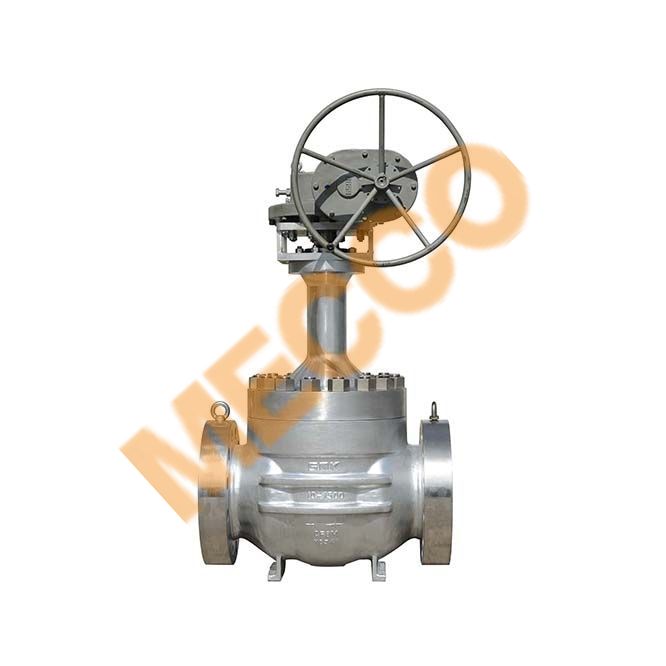
A cryogenic ball valve offers:
It is widely used in:
Their robust design allows them to maintain leak-tight performance even after repeated thermal cycling.
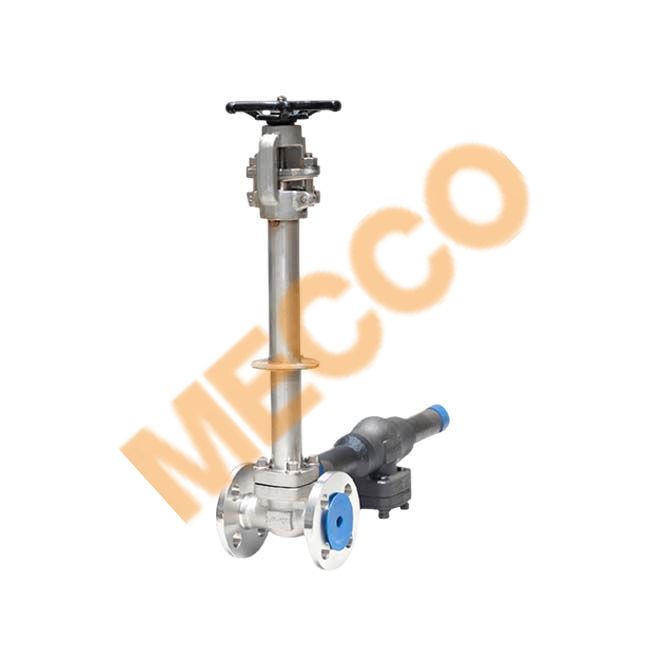
Cryogenic gate valves provide:
These valves are commonly used in:
They are recommended for systems requiring full open/full close without throttling.
Cryogenic globe valves offer precise flow regulation and excellent throttling performance.
They are the preferred choice for:
In air separation and hydrogen plants, globe valves are essential for accurate flow adjustment.
A check valve ensures one-way flow, preventing dangerous backflow that can damage:
Backflow prevention is critical to maintaining system safety.
Cryogenic valves are typically manufactured from stainless steel because it provides:
Materials such as Monel, Inconel, and duplex stainless steel may also be used for specialized conditions.
In cryogenic plants, valves must work seamlessly with insulated piping systems designed to handle:
Cryogenic valves are installed in:
To guarantee performance in −196°C environments, Mecco performs rigorous cryogenic testing, including:
Valves are submerged and cycled to evaluate:
Ensures valves meet global LNG and hydrogen safety standards.
Measures internal and external leakage with extremely high sensitivity.
Ensures valves meet customer requirements for both soft and metal-seated designs.
These capabilities allow Mecco to supply reliable LNG valves, cryogenic valves, and low temperature valves for global markets.
Cryogenic valves typically operate from −50°C to −196°C, depending on the application (LNG, LOX, hydrogen, etc.).
The extended bonnet keeps the packing area warm enough to prevent freezing and ensures smooth valve operation.
Cryogenic ball valves are common in LNG transfer lines due to fast operation and excellent sealing.
Yes. Stainless steel (304/316/316L) is the most widely used due to its toughness at low temperatures.
Many systems require ANSI Class V or Class VI, depending on whether the seat is metal or soft.
No. Gate valves should be fully open or fully closed. For throttling, choose cryogenic globe valves.
Cryogenic testing under −196°C, helium leak test, seat leakage test, and functional cycling.
They are used to prevent reverse flow in LNG, hydrogen, and industrial gas piping systems.