
Selecting the right valve material is one of the most critical decisions in industrial piping systems. Valve performance, safety, service life, and maintenance costs are all directly affected by material choice—especially when dealing with different temperatures and pressure, corrosive media, or demanding operating environments.
This guide compares carbon steel, stainless steel, and special alloy valves, helping you understand which material best fits applications involving gate valves, ball valves, and other flow control solutions.
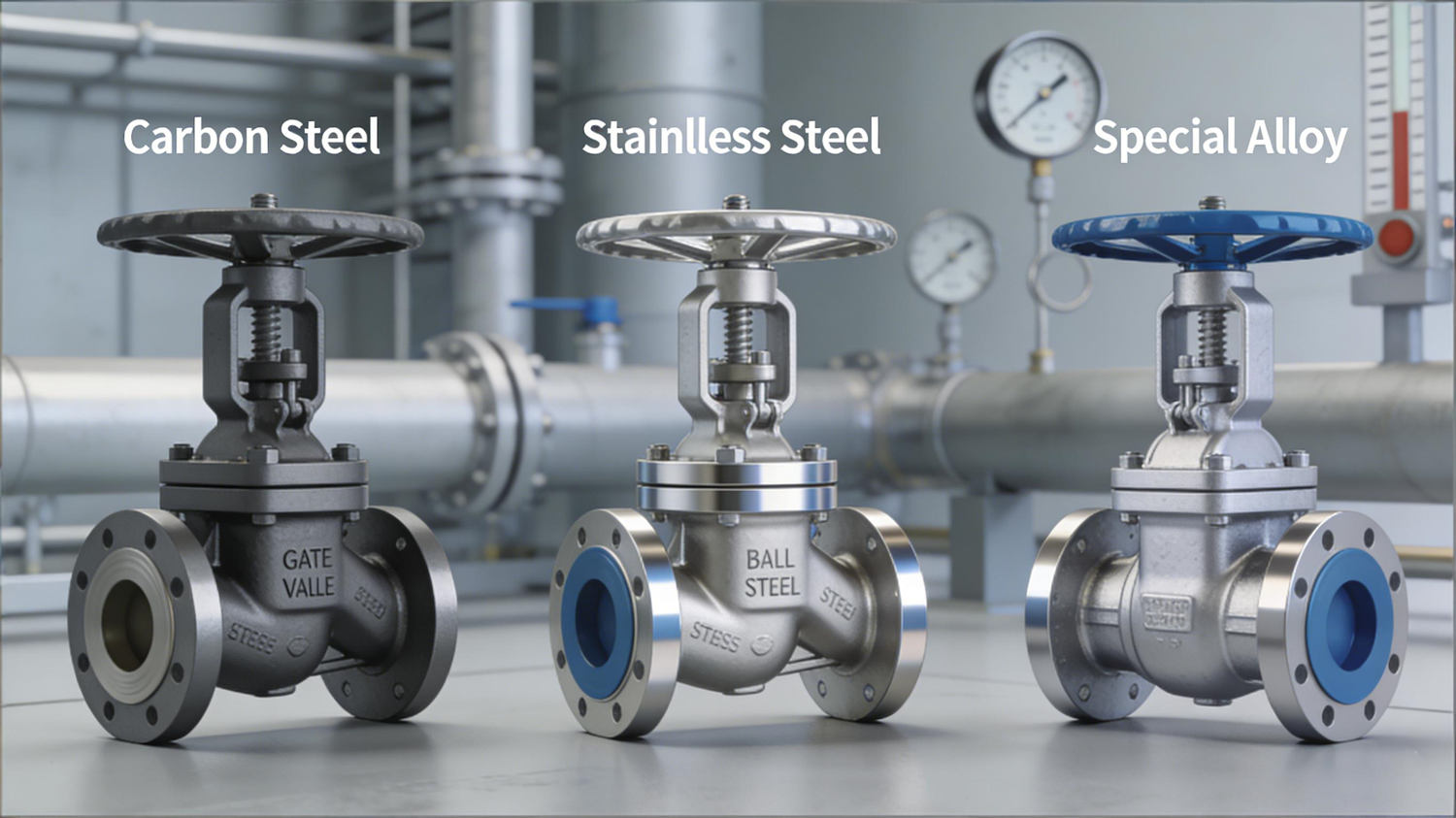
Valve materials must withstand:
Incorrect material selection can lead to leakage, corrosion, premature failure, and costly downtime. Choosing the right valve materials ensures reliability, safety, and long-term performance.
Carbon steel valves are widely used due to their strength, durability, and affordability. They perform well under high pressure and moderate temperature conditions.
Advantages
Limitations
Carbon steel is often selected when corrosion risk is low and budget control is a priority.
Stainless steel valves offer excellent resistance to corrosion, oxidation, and chemical attack. They are commonly used in systems where cleanliness and durability are critical.
Key Benefits
Stainless steel ball valves are especially popular due to their:
They are widely used for precise flow control and isolation.
Stainless steel valves provide a balance between performance, reliability, and cost.
Special alloy valves are manufactured from advanced materials such as:
These special alloy materials are engineered for extreme operating conditions where standard materials fail.
When reliability under extreme conditions is non-negotiable, special alloy valves are the optimal solution.
| Feature | Carbon Steel | Stainless Steel | Special Alloy |
|---|---|---|---|
| Corrosion Resistance | Low | High | Very High |
| Temperature Range | Medium–High | Wide | Extreme |
| Pressure Resistance | High | High | Very High |
| Cost | Low | Medium | High |
| Typical Valve Types | Gate valves | Ball valves, gate valves | Alloy valve, ball valves |
| Service Life | Medium | Long | Very Long |
A well-matched valve material ensures stable performance and reduces long-term operational risk.
Carbon steel is the most commonly used valve material due to its strength and cost efficiency, especially in oil, gas, and power applications.
Stainless steel valves should be used when corrosion resistance, hygiene, and long service life are required, such as in chemical, food, and pharmaceutical industries.
Special alloy valves are essential in industries with extreme temperatures, pressure, or corrosive environments, including offshore oil & gas, chemical processing, and LNG.
Yes, stainless steel ball valves are suitable for high-pressure applications and provide excellent sealing performance.
Higher temperatures and pressure demand materials with superior strength and stability, often requiring stainless steel or special alloy solutions instead of carbon steel.
Choosing the right valve material—whether carbon steel, stainless steel, or special alloy—is critical for system safety, efficiency, and longevity. By understanding operating conditions, application requirements, and valve types such as gate valves and ball valves, engineers and buyers can make informed decisions that optimize performance and reduce total cost of ownership.
If you need help matching the right valve materials to your application, selecting the correct material is always the first step toward reliable flow control.