Common Valve Failures in Chemical Plants and How to Prevent Them
Learn the most common valve failures in chemical plants—leakage, corrosion, actuator issues, worn internal components—and how to prevent them with proper valve selection, maintenance, and troubleshooting. A complete engineer’s guide to improving valve performance and avoiding safety hazards.
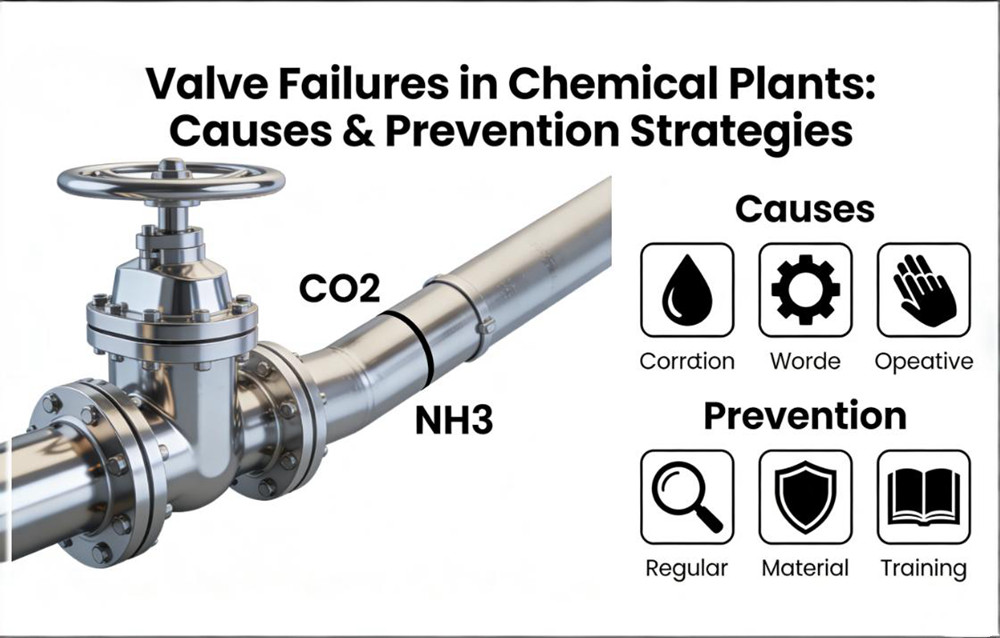
In chemical processing facilities, valves operate under high pressure, varying fluid temperature, corrosive chemicals, and continuous cycles of open or close operations. These demanding environments make valve failures one of the most frequent causes of unplanned downtime, leakage events, and safety hazards. Understanding why valves fail—and how to prevent recurring issues—is essential for process engineers, maintenance teams, and reliability managers.
This article analyzes the most common problems in chemical plant valves, explains how internal components, valve body materials, and pneumatic actuators contribute to failures, and provides practical prevention strategies based on real operational conditions. All content directly targets major problem keywords that attract engineers searching for solutions.
1. Valve Leakage: The Most Frequent Failure Mode
Valve leakage is the leading cause of valve performance issues in chemical plants. Leakage may be internal (through the seat) or external (through packing, flanges, or the body).
Why Leakage Happens
- Worn valve components
- Erosion and corrosion inside the valve body
- Damage caused by cavitation or high-velocity fluid flow
- Incompatible materials for corrosive media
- Poor installation or incorrect tightening torque
How to Prevent Valve Leakage
- Use corrosion resistant valves made from stainless steel, duplex, Hastelloy, or PTFE-lined materials.
- Implement regular maintenance including seat inspection and packing adjustment.
- Avoid unnecessary disassembling the valve which may damage sealing surfaces.
- Monitor pressure drops and early leakage signs during routine inspections.
2. Wear and Tear of Internal Components
Chemical processes involving solids, acids, or high-pressure differentials accelerate the degradation of internal components such as trim, seats, discs, and plugs.
Causes of Wear and Tear
- Abrasive or slurry-type media
- Frequent cycling (open/close)
- High-velocity flow or improper valve sizing
- Excessive fluid temperature
- Corrosion from incompatible media
Prevention Measures
- Select trim materials designed for severe service.
- Add strainers or filters upstream of the valve.
- Use hardened or coated surfaces for erosive applications.
- Conduct periodic internal inspections during planned shutdowns.
3. Pneumatic Actuator and Control System Failures
Many control valves rely on pneumatic actuators. When actuators fail, valves may stick, drift, or fail to respond to commands.
Why Actuator Failures Occur
- Contaminated air supply (oil, water, dust)
- Broken diaphragms
- Insufficient actuator torque
- Stiction due to poor lubrication
- Malfunctioning positioners in the control system
Actuator Failure Prevention
- Maintain a clean, dry instrument air system.
- Verify correct actuator sizing for all chemical plant valves.
- Calibrate and test positioners during scheduled maintenance.
- Replace worn mechanical parts regularly.
4. Corrosion of Valve Body and Components
Corrosion is one of the most aggressive and costly forms of valve failure in chemical processing.
Causes of Corrosion
- Chemical attack from acids, solvents, or chlorides
- High fluid temperature
- Stress-corrosion cracking (SCC)
- Incorrect material selection
Preventing Corrosion Failures
- Choose corrosion resistant valves based on chemical compatibility charts.
- Use alloy steel, duplex, or nickel-based materials for harsh media.
- Apply PTFE, PFA, or rubber linings for highly corrosive fluids.
- Conduct corrosion-rate monitoring and thickness testing.
5. Incorrect Valve Selection for the Application
One of the most overlooked reasons for valve issues is poor valve selection.
Selection Errors That Lead to Failures
- Using a general-purpose valve in a corrosive process
- Undersizing or oversizing valves
- Selecting the wrong type of control valves
- Failure to consider pressure, temperature, viscosity, and chemical compatibility
Correcting Selection Problems
- Perform detailed process analysis before selecting valves.
- Work with suppliers familiar with challenging chemical applications.
- Choose valves designed specifically for aggressive media or high-cycle operations.
6. Common Control Valve Issues Affecting Performance
Control valves play a critical role in flow regulation. Failure in these valves can disrupt stability and precision across an entire production line.
Symptoms of Poor Control Valve Performance
- Instability or oscillation in flow control
- Excessive noise, vibration, or cavitation
- Slow stroke response
- Sudden deviations in process parameters
How to Improve Control Valve Performance
- Use the correct valve characteristic (linear, equal-percentage, quick-opening)
- Keep positioners clean and calibrated
- Validate control loop tuning
- Reduce pressure drop or use anti-cavitation trim
7. Problems Caused by Poor Maintenance or Improper Disassembly
Not all failures are caused by operation. Some occur due to human error during maintenance.
Common Maintenance Mistakes
- Damaging sealing surfaces during disassembling the valve
- Reassembly errors affecting stem alignment or trim seating
- Over-tightening bolts on the valve body
- Using incorrect replacement parts or inferior seals
Preventive Practices
- Follow manufacturer maintenance procedures precisely.
- Use torque tools to avoid overtightening.
- Train technicians specifically for chemical-service valve repair.
- Replace gaskets, packing, and soft parts according to schedule.
Preventing Valve Failures: A Practical Strategy for Chemical Plants
1. Implement Regular Maintenance
- Leak testing
- Packing adjustments
- Actuator calibration
- Trim wear inspection
2. Document Valve History
Track failure frequency, conditions, and replaced parts to improve future valve selection.
3. Add Condition Monitoring
- Stroke time analysis
- Vibration sensors
- Pressure and flow monitoring
4. Upgrade High-Risk Valves
Replace outdated, corroded, or incompatible units with modern chemical plant valves designed for harsh environments.
FAQs: Common Valve Failures in Chemical Plants
1. What are the most common valve failures?
The most common failures include valve leakage, corrosion, trim wear, actuator malfunction, and improper valve selection.
2. Why do valves leak in chemical plants?
Leakage is typically caused by corrosion, worn internal components, erosion, improper installation, and material incompatibility.
3. How can I prevent actuator failures?
Maintain clean instrument air, inspect pneumatic actuators, and ensure proper actuator sizing.
4. What causes severe corrosion in valves?
Corrosive chemicals combined with high fluid temperature, incorrect materials, and stress lead to rapid corrosion.
5. What should I check before disassembling the valve?
Confirm that disassembly is necessary and follow proper procedures to avoid damaging sealing surfaces and internal parts.
6. How do I choose the right valve for a chemical plant?
Analyze the media, pressure, temperature, flow rate, and corrosion risks. Select corrosion resistant valves designed for chemical applications.
7. What are warning signs of control valve problems?
Unstable flow, noise, vibration, slow response time, and inconsistent control signals.